Worth a listen
Miklas has collected podcasts, features and films that take a critical look at AI, power and the ideas coming out of Silicon Valley. Everything here is in German.












Single episodes
Hörsaal · Deutschlandfunk Nova
Was passiert, wenn KI unsere Arbeit übernimmt
What happens when AI takes over our work
Calculating, driving, operating: data-driven systems can do many things better than we can, so in future we will work a lot less. A talk by philosopher Peter G. Kirchschläger.
Read more
Kirchschläger is professor of theological ethics at the University of Lucerne. He gave the talk at the aha festival of knowledge in Lucerne on 30 January 2026.
Wissenschaft im Brennpunkt · Deutschlandfunk
Nobelpreis für die KI
A Nobel Prize for AI
Suppose relativity had never been discovered: could an AI find it? That is up for debate. What is clear is that AI is taking over research, and some think Nobel-worthy results are only a matter of time.
Sternstunde Philosophie · SRF
Mit Elon Musk in ein neues Zeitalter?
Into a new era with Elon Musk?
To many, Elon Musk is a dazzling entrepreneur and the richest person in the world. Historian Quinn Slobodian sees far more in him: Musk stands for a new worldview with a deeply troubling understanding of democracy and technological freedom.
Read more
Most people think of Tesla, X, SpaceX rockets or Neuralink's brain-computer interfaces. For Slobodian that falls short. Musk is not just one person or a set of successful companies but an ideological project: a worldview that aims to reprogram society, with far-reaching political consequences.
Olivia Röllin talks with Slobodian, author of “Muskism”, about how contrarian bets and substantial state support made Musk the richest man in the world, one who now even helps decide the course of wars, and about the world the self-proclaimed “Technoking” envisions when he talks about merging humans with artificial intelligence.
Zeitfragen. Feature · Deutschlandfunk Kultur
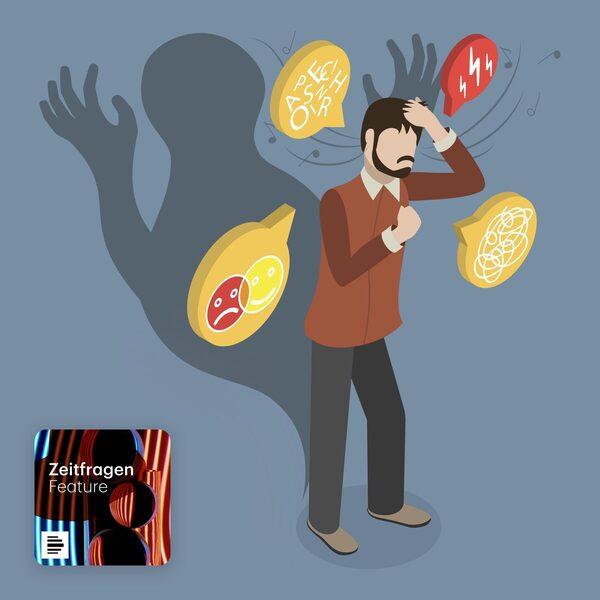
Mensch und KI: Die Grenzen der Kontrolle
Humans and AI: the limits of control
Tech companies are building ever more complex and capable AI models, and some researchers warn about the consequences. A feature by Jana Wuttke about lying algorithms and depressed robots.
Dok 5 · WDR 5
Die dunkle Aufklärung: Trump, Vance und ihre radikalen Schatten
The Dark Enlightenment: Trump, Vance and their radical shadows
Donald Trump and his administration are unsettling the whole world. Is there a strategy behind it, or is the US government really as erratic and contradictory as it often seems? A feature by Ralph Glander.
Hörsaal · Deutschlandfunk Nova
Selbstoptimierung: Warum uns Self-Tracking so fasziniert
Self-optimisation: why self-tracking fascinates us
Exercise, food, wellbeing: we can track almost every part of our lives with our phones. But why do we do it, and what does measuring ourselves do to us? A talk by sociologist Stefan Selke (Furtwangen University).
Read more
He gave the talk, on how digital self-tracking and AI shape our lives, at the University of Mainz on 16 December 2025.
Hörsaal · Deutschlandfunk Nova
Künstliche Intelligenz: Wenn wir Maschinen wie Menschen behandeln
AI: when we treat machines like people
We tend to attribute human feelings to robots and AI. What does that do to us? A talk by psychiatrist and philosopher Thomas Fuchs (Heidelberg University Hospital).
Read more
Fuchs holds the Karl Jaspers professorship for philosophy and psychiatry. His talk, “Digital animism: how we deal with artificial agents”, was part of a Heidelberg University lecture series on humans and algorithms.
Jung & Naiv · Episode 818
Philosoph Rainer Mühlhoff über Künstliche Intelligenz & Faschismus
Philosopher Rainer Mühlhoff on artificial intelligence and fascism
Tilo Jung talks at length with philosopher and mathematician Rainer Mühlhoff (Osnabrück University) about AI and fascism. At just over four hours, it is one for several evenings.
Jung & Naiv · Episode 835
Philosophin Catrin Misselhorn über KI- & Roboter-Ethik
Philosopher Catrin Misselhorn on AI and robot ethics
Tilo Jung talks with philosopher Catrin Misselhorn about the ethics of AI and robots. Further down there is also a shorter conversation with her about machines that show feelings.
Essay und Diskurs · Deutschlandfunk
Eine bildexegetische Annäherung an die kalifornische Ideologie: Emoji-Welt
Emoji world: reading the Californian ideology through its pictures
A smiley, a pout or a shrugging shruggie, and everything in digital communication seems clear. But what can't be said with emojis? Might this cute language express a rather drastic ideology? An essay by Holm Friebe.
Essay und Diskurs · Deutschlandfunk
Im Angesicht der Katastrophe: Die Angst der Tech-Milliardäre vor ihrem Personal
Facing catastrophe: the tech billionaires' fear of their own staff
What view of the world and of people drives the Silicon Valley billionaires who increasingly shape how we think? And how can we push back against the excesses of this tech mindset? Media theorist Douglas Rushkoff in conversation with Andreas von Westphalen.
Das Wissen · SWR
Ideologiegeschichte des Silicon Valley: Von Flower Power bis Elon Musk
A history of Silicon Valley ideology: from flower power to Elon Musk
The flower-power era of the late 1960s produced a group of tech-loving computer hippies who shaped the spirit of the emerging Silicon Valley. Are today's libertarian, state-scorning tech billionaires their ideological grandchildren, or was there a break?
Dlf Doku · Deutschlandfunk
Kill Cloud: Von 9/11 zum digitalen Krieg
Kill Cloud: from 9/11 to digital war
AI already shapes today's wars, and the once free internet has become a tool of data surveillance. A development that began on 11 September 2001. A feature by Andrea Rehmsmeier.
Sein und Streit · Deutschlandfunk Kultur
Maschinen, die Gefühle zeigen
Machines that show feelings
Thanks to emotional intelligence, sex robots are supposed to get even closer to us. Philosopher Catrin Misselhorn says that raises ethical questions: the extent to which these and other machines probe and influence our feelings is worrying.
43 min
Gesellschaft besser machen · Körber-Stiftung
Wer profitiert vom KI-Hype?
Who profits from the AI hype?
What happens when AI hype, the tech industry and right-wing politics work together? Philosopher and mathematician Rainer Mühlhoff warns of an alliance of technology, power and authoritarian ideologies.
Read more
With host Muschda Sherzada he talks about AI-driven polarisation, transhumanist narratives from Silicon Valley, the myth of technological progress, and why Germany and Europe should look more closely and regulate more firmly.
Interview · Deutschlandfunk
Was erzählt die Erzählung über KI?
What does the story about AI tell us?
A short interview with literary scholar Joseph Vogl about the stories we tell ourselves about AI.
11 min
Lesart · Deutschlandfunk Kultur
Wenn Maschinen denken: Rüdiger Safranski über „Die vierte Kränkung“ des Menschen
When machines think: Rüdiger Safranski on the “fourth blow” to humanity
Copernicus, Darwin and Freud each pushed humans a little further from the centre. Is thinking AI the fourth great blow to our self-image? A short conversation with philosopher and writer Rüdiger Safranski.
Zeitfragen. Feature · Deutschlandfunk Kultur
KI-assoziierte Psychosen: Wie Gespräche mit Chatbots unsere Wahrnehmung verändern können
AI-associated psychosis: how talking to chatbots can change our perception
Talking to a chatbot can feel like talking to a real person. But what happens when an AI system doesn't just respond, but affirms us and seems to understand us? There is already a buzzword for it: AI psychosis.
Hintergrund · Deutschlandfunk
Superintelligenz: Wie gefährlich ist die KI der Zukunft?
Superintelligence: how dangerous is the AI of the future?
There is a lot of uncertainty about how independently AI can act. Between technical feasibility, political regulation and commercial interests, Milan Procyk asks how big the “I” in AI should be written.
Das Wissen · SWR
Wenn Chatbots die Karriere mitbestimmen: KI in der Personalauswahl
When chatbots shape your career: AI in hiring
HR departments hope AI will help them assess applicants more objectively and efficiently. For that, though, the AI has to be trained perfectly. And applicants are using AI too.
Hintergrund · Deutschlandfunk
KI im Kinderzimmer: Wenn ChatGPT Plüschohren bekommt
AI in the nursery: when ChatGPT gets plush ears
AI isn't only advancing in the office but also in children's rooms. Talking cuddly toys delight kids, but they raise questions about data protection, social behaviour and sensitive topics. By Anna Loll.
Sternstunde Philosophie · SRF
KI-Wettlauf: Was bedroht uns wirklich, Rainer Mühlhoff?
The AI race: what really threatens us, Rainer Mühlhoff?
Delight at AI's technical progress is increasingly giving way to panic: what if a superintelligence wipes out humanity? Philosopher and mathematician Rainer Mühlhoff sees the dangers elsewhere, in the growing entanglement of tech companies and the state.
Read more
His short Reclam book “Artificial Intelligence and the New Fascism” became a surprise success. In it, the Osnabrück professor warns of the political dangers posed by companies like SpaceX or Palantir: as they take over more and more state functions, politics becomes dependent on private business, and the state turns into a company steered by a few of the super-rich.
Mühlhoff also calls AI a “people-sorting technology”: built into it is the ability to measure and monitor people on an unprecedented scale. With AI players like Elon Musk and Peter Thiel openly opposing democratic principles and enthusing about a transhumanism in which a strong, intelligent master race takes over, he sees growing fascist tendencies. What can be done? Barbara Bleisch hosts the conversation.
Documentary series
Multi-part series for when you want to go deeper.
- 5 episodes
1LIVE
Die Elon Musk Story
The Elon Musk story
Elon Musk: billionaire, visionary. A role model and icon to some, a ruthless power player and political arsonist to others. Who is he, what drives him and what does he want?
- 6 episodes
Deutschlandfunk
Die OpenAI Story
The OpenAI story
AI is too dangerous to leave to Google, Sam Altman decides, and in 2015 he founds OpenAI with Elon Musk, as a non-profit. They win over the greatest talent, not with money but with a mission: we are the good guys. But is that true?
- 3 episodes
Die Entscheidung · BR24
Facebook: Von Likes und Macht
Facebook: of likes and power
How did a Harvard student project become the most powerful social media company in the world? The first episode goes back to the beginning: Mark Zuckerberg, “The Facebook” and the moment algorithms started deciding which posts we see and which we don't.
- 3 episodes
Wild Wild Web · BR
Bad Bromance: Elon Musk, Peter Thiel und ihr Weg an die Macht
Bad Bromance: Elon Musk, Peter Thiel and their road to power
Peter Thiel is one of the most powerful and most enigmatic figures in Silicon Valley. Much of what shapes US politics today was visible long ago. The starting point: a momentous friendship, or was it a rivalry?
Read more
In the late nineties Peter Thiel and Elon Musk meet in Silicon Valley. It is the start of a fateful relationship that not only changed how you pay online, but is now plunging American democracy into a deep crisis.
- 6 episodes
Deutschlandfunk
Die Peter Thiel Story
The Peter Thiel story
Already as a Stanford student, the German-born investor develops his stance as a contrarian against political correctness. Peter Thiel builds a powerful network, the basis for a cultural shift to the right.
- 5 episodes
Wild Wild Web · BR
Inside Palantir
The sixth season of Wild Wild Web tells the story of Palantir, perhaps the most mysterious software company in the world. It plays a key role in many conflicts, from the wars in Ukraine and the Middle East to the mass arrests by the US immigration agency ICE.
Read more
It is also the life story of Palantir's unusual CEO Alex Karp, part Steve Jobs, part James Bond, who has gone through a remarkable transformation. There is a lot of dangerous half-knowledge about Palantir. The team looked behind the scenes and spoke to many former employees: balanced and critical, without PR or scaremongering.
- 2 × 6 episodes
Deutschlandfunk
Tech Bro Topia
From everyday AI to “superintelligence” and the possible extinction of humanity: what thinking lies behind the hype, the alarm and the doomsday scenarios? Tech Bro Topia takes apart the ideologies of Silicon Valley and the tech billionaires. Season 2 is called “AI, power and resistance”.






Films
Two films about chatbots and synthetic voices standing in for human relationships.
Documentary · Florian Karner · 2026
Finding Connection
In our digital world, real closeness is becoming rare. “Finding Connection” follows people searching for trusting relationships and emotional connection who, paradoxically, find support in the algorithms of AI systems.
Read more
World premiere at CPH:DOX 2026, German premiere at DOK.fest Munich 2026.
About the film: Finding ConnectionDOMAR FilmFeature film · Spike Jonze · USA 2013
Her
A lonely man falls in love with Samantha, the AI voice of his new operating system. Spike Jonze's film came out in 2013, long before ChatGPT.
About the film: HerWikipedia

Want to talk about it?
As soon as the discussion group has a new date, we'll announce it in our Signal group. You're welcome to share what you've listened to there already.
 Join our Signal group